Kedarkantha Trek
Description :

Altitude

Duration

Trek Length

Base Camp

Trek Difficulty

Transportation
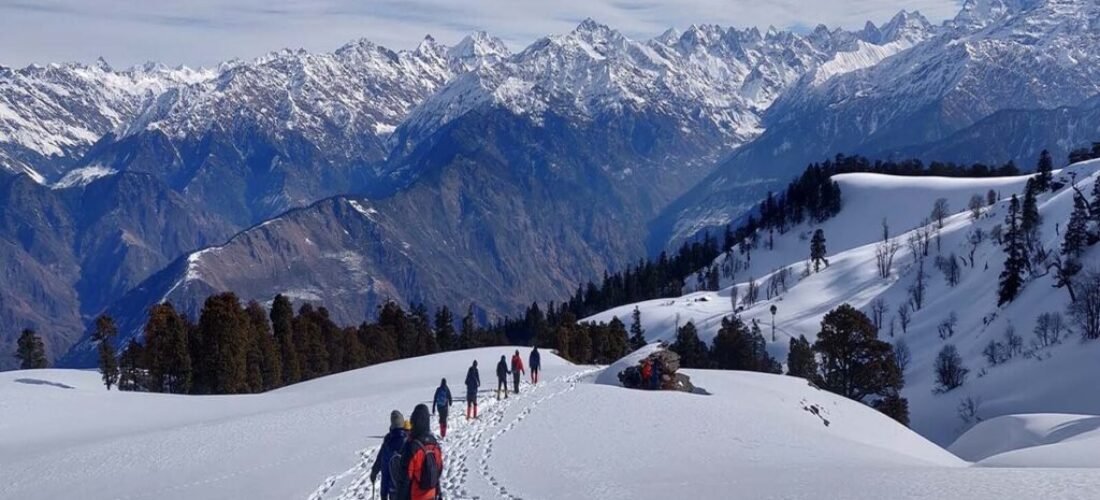
The Kedarkantha Trek is one of the most loved Himalayan treks, often called the “Queen of Winter Treks” for its stunning snowy landscapes and breathtaking summit climb. Situated inside the Govind Pashu Vihar National Park in Uttarkashi district of Uttarakhand, Kedarkantha stands tall at an altitude of 12,500 feet (3,800 m). It is among the rare beginner-friendly treks in India where trekkers can enjoy a complete summit experience with panoramic views of some of the most majestic Himalayan peaks, including Swargarohini, Bandarpoonch, Black Peak (Kala Nag), Ranglana, and several others.
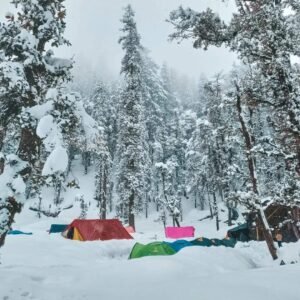
The charm of Kedarkantha lies in its variety of landscapes. The trail begins from Sankri village, a quaint settlement at 6,400 feet, and passes through dense pine and oak forests that often look like they are straight out of a fairytale. As trekkers move higher, they come across the serene Juda Ka Talab, a high-altitude lake surrounded by forests and meadows that transforms into a frozen wonderland in winter. Further ahead, open clearings and snow-covered trails lead to the breathtaking summit ridge, offering a 360-degree view of over 13 Himalayan peaks.
Unlike many Himalayan treks that simply lead to a viewpoint, Kedarkantha is a true summit trek, which makes it stand out. Reaching the peak is a thrilling experience, especially for beginners, as the climb is gradual and the path is well-defined, making it safe yet adventurous. The campsites of Kedarkantha—Juda Ka Talab, Hargaon, and Kedarkantha Base—are also considered some of the most beautiful in the Indian Himalayas, offering a mix of forest clearings, lakeside camping, and snowy meadows.
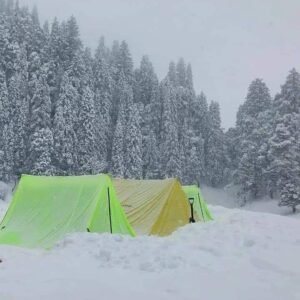
The trek is around 20 kilometers long and usually takes 5 to 6 days to complete, including travel from Dehradun. It is graded as easy to moderate, making it perfect for first-time trekkers, families, solo travelers, and those looking for a short Himalayan adventure. While Kedarkantha is most popular as a winter trek from December to April, when the trail is covered in thick snow, it can also be done in other seasons. In summer, trekkers can experience lush green meadows, blooming wildflowers, and crystal-clear skies, offering a completely different charm compared to the snowy winters.
The weather on the Kedarkantha Trek varies with the season. In winter, daytime temperatures hover around 5°C to 10°C, while nights can drop to -5°C to -10°C, making warm layering essential. During summer and post-monsoon, the weather is much milder, ranging between 5°C to 15°C, with clear skies offering uninterrupted views of the Himalayas.
What truly makes the Kedarkantha Trek famous is its accessibility, beauty, and beginner-friendly nature. Located just about 220 km from Dehradun, the base camp Sankri is easy to reach by road, and the trek can be completed within a week. For many, Kedarkantha is the perfect introduction to Himalayan trekking—offering snow, forests, meadows, lakes, and a summit climb all in one journey.
Itinerary
Day 1: Dehradun to Sankri :
- Distance: ~190 km
- Travel Time: 8–10 hours
- Altitude Gain: Dehradun (2,150 ft) → Sankri (6,400 ft)
- Mode of Transport: Shared tempo travelers / taxis
The Kedarkantha trek begins early morning from Dehradun, where trekkers assemble at ISBT or the railway station by 6:00 AM. After meeting the trek leader and fellow trekkers, the scenic drive to Sankri starts. Covering about 200 km in 8–10 hours, the journey takes you deep into the Garhwal Himalayas.
The route passes through Mussoorie, often called the “Queen of Hills.” A short stop near Kempty Falls or a local dhaba allows for breakfast and mountain views. As the drive continues, you pass charming villages like Purola and Mori, famous for apple orchards and traditional wooden houses. Alongside, the Yamuna and Tons rivers flow, with vast stretches of pine and deodar forests making the journey refreshing.
By afternoon, the vehicle enters the Govind Pashu Vihar National Park and Sanctuary, known for its rich biodiversity and dense forests. The last stretch to Sankri is especially scenic, with winding mountain roads and beautiful viewpoints for quick tea and photo breaks.
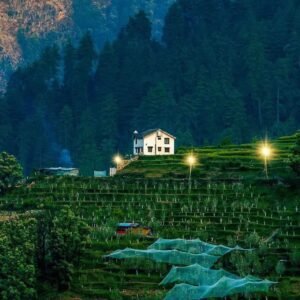
By early evening, you arrive at Sankri (6,400 ft), the base village of the Kedarkantha trek. Snow-capped peaks like Swargarohini, Bandarpoonch, and Black Peak rise dramatically in the background. On arrival, trekkers check into a cozy guest house or homestay, enjoy evening tea and snacks, and attend a briefing session by the trek leader about the next day’s plan and safety measures. After dinner, most trekkers retire early to rest from the long journey.
Day 2: Sankri to Juda ka talab :
- Trek Distance: ~3 km
- Trek Duration: 4–5 hours
- Altitude Gain: Sankri (6,400 ft) → Juda Ka Talab (9,100 ft)
- Trail Type: Gradual ascent through forest trails
Day 2 marks the beginning of the actual trek. After an early breakfast in Sankri village, trekkers set off towards Juda Ka Talab, one of the most picturesque campsites of the Kedarkantha trek. The trail stretches for about 4 km and takes around 4–5 hours, with a steady ascent that allows you to acclimatize comfortably.
The trek starts from the village, passing through dense pine and oak forests, with patches of maple and walnut trees. As you climb higher, you’ll notice the cool mountain air, chirping birds, and occasional openings in the forest that reveal distant snow-capped peaks. Along the way, small wooden huts, grazing meadows, and tiny streams add charm to the trail.
By midday, you reach the enchanting campsite of Juda Ka Talab (9,100 ft). This high-altitude lake, surrounded by tall pine trees, is said to have been formed by Lord Shiva’s water droplets from his hair. In winter, the lake often freezes, creating a magical sight, while the surrounding meadows are blanketed in snow.
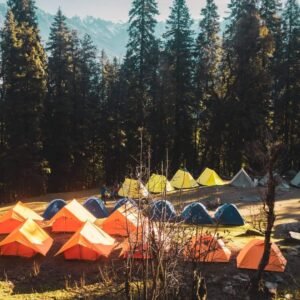
Trekkers set up camp near the lake and enjoy hot lunch amidst pristine surroundings. The afternoon is usually spent relaxing, exploring the forest, or simply soaking in the silence of the Himalayas. As evening sets in, the campsite transforms into a breathtaking scene with starlit skies, crackling bonfires, and the crisp mountain breeze.
Dinner is served at the campsite, followed by an overnight stay in tents. The experience of camping beside Juda Ka Talab, surrounded by forests and snow, is often considered one of the highlights of the Kedarkantha trek.
Day 3: Juda ka talab to Kedarkantha Base Camp :
- Trek Distance: ~3 km
- Trek Duration: 3–4 hours
- Altitude Gain: Juda Ka Talab (9,100 ft) → Kedarkantha Base Camp (11,250 ft)
- Trail Type: Gradual ascent with a few steep sections
After a refreshing night beside Juda Ka Talab, Day 3 begins with a hearty breakfast before starting the trek towards Kedarkantha Base Camp. The trail covers around 4 km and usually takes 3–4 hours, moving through a mix of thick forests and open meadows.
The initial stretch passes through towering pine and oak trees, with sunlight filtering through the canopy and occasional clearings offering glimpses of snow peaks. As you gain altitude, the forest gradually opens up into expansive meadows with stunning views of the Swargarohini, Bandarpoonch, Black Peak, and Ranglana ranges.
By early afternoon, you reach the campsite at Kedarkantha Base Camp (11,250 ft). This spot is one of the most scenic camps on the trek, with wide open grounds surrounded by snowy slopes and towering peaks. On clear days, sunset from the base camp is magical—the sky painted in shades of orange and pink with Himalayan peaks glowing golden.
After reaching camp, trekkers enjoy a hot lunch followed by rest and acclimatization. In the evening, the trek leader briefs everyone about the next day’s summit climb, safety protocols, and timing. Dinner is served early so trekkers can rest well before the midnight/early morning summit push.
Day 4 : Kedarkantha Base Camp to Summit and back to Juda ka talab :
- Trek Distance: ~11 km (to summit and descent)
- Trek Duration: 7–8 hours
- Altitude Gain: Base Camp (11,250 ft) → Kedarkantha Summit (12,500 ft) → Juda Ka Talab (9,100 ft)
- Trail Type: Steep ascent to summit, descent via forest and meadows
Day 4 is the most exciting and challenging part of the Kedarkantha trek—the summit climb. Trekkers wake up around 2:00–3:00 AM, have a quick hot beverage, and begin the ascent with headlamps lighting the snowy trail. The early start is crucial to catch the sunrise from the summit, one of the highlights of the trek.
The trail from base camp to the summit is steep and demanding, but incredibly rewarding. The climb passes through pine forests, snowy ridges, and finally opens up to a wide slope leading to the top. As you near the summit, the horizon begins to glow, and once at the peak (12,500 ft), you are rewarded with a 360-degree view of Himalayan ranges including Swargarohini, Bandarpoonch, Black Peak, Rupin-Supin valleys, Yamunotri and Gangotri ranges, and even glimpses of the Kinner Kailash mountains on clear days.
Watching the sunrise from the Kedarkantha summit is an unforgettable experience—the snow glitters golden, and the vast Himalayan skyline stretches endlessly. Trekkers spend some time at the top, soaking in the views and taking photographs before beginning the descent.
The return journey retraces back to base camp for a short rest and hot breakfast. After refreshing, the descent continues towards Juda Ka Talab, where trekkers camp for the night. The trail back down is easier, passing through forests and meadows, eventually leading to the familiar campsite by the frozen lake.
Evening at Juda Ka Talab is relaxed after the summit push. Trekkers gather around bonfires, share stories, and enjoy a warm dinner under a starlit sky.
Day 5: Juda ka talab to Sankri To Dehradun :
- Trek Distance: ~3 km (Juda Ka Talab → Sankri)
- Trek Duration: 2–3 hours (descent)
- Drive Distance: ~200 km (Sankri → Dehradun)
- Drive Duration: 8–10 hours
- Altitude Change: Juda Ka Talab (9,100 ft) → Sankri (6,400 ft) → Dehradun (2,150 ft)
After breakfast at Juda Ka Talab (9,100 ft), trekkers begin the final descent towards Sankri (6,400 ft). The trail, about 4 km long, passes through dense pine and oak forests with small clearings and mountain streams along the way. The descent usually takes 2–3 hours, and by late morning you reach the charming Sankri village where the trek officially concludes. After a short rest and refreshments, the long drive back to Dehradun begins. Covering around 200 km in 8–10 hours, the route retraces through Mori, Purola, and Mussoorie, offering one last chance to admire the valleys, rivers, and mountain views. Most trekkers reach Dehradun by evening between 6:00–8:00 PM, making it safe to book onward travel after 9:00 PM. This day is both joyful and nostalgic—bringing the Kedarkantha adventure to a close with unforgettable memories of summit views, forest trails, and Himalayan hospitality.
Trek Cost Inclusion :
Transportation :
-
Shared transportation from Dehradun to Sankri and return
-
Vehicles used: Tempo Traveller, Bolero, or Sumo
-
Pickup and drop typically from ISBT Dehradun or Railway Station
-
Note: Budget packages may exclude transport
Accommodation :
-
1 night stay in a guest house or homestay in Sankri (on arrival)
-
3 nights camping during the trek in alpine tents
-
Triple sharing tents with sleeping bags, foam mats, and liners
-
Clean toilet tents and separate kitchen/dining tents
Meals :
-
All vegetarian meals included from Day 1 dinner to Day 5 breakfast
-
Morning tea/coffee, hot lunch/dinner, and light evening snacks
-
Egg options may be available in some packages
-
Hygienic and nutritious Indian meals prepared by trek cooks.
Trekking Staff :
-
Certified trek leader and trained mountain guide
-
Cook, helper, and support staff
-
Porters or mules for carrying common equipment and supplies.
Trekking Equipment :
-
Waterproof alpine tents, dining tents, toilet tents
-
Sub-zero rated sleeping bags, liners, and foam mattresses
-
Microspikes and gaiters for snow-covered trails (seasonal)
-
Group gear and utensils for cooking and serving meals
How To Reach
By Air
- Nearest Airport: The nearest airport is Jolly Grant Airport in Dehradun.
- From the Airport to Dehradun: From the airport, you can take a taxi or a bus to Dehradun city (approximately 30 km).
By Train
- Nearest Railway Station: The nearest railway station is Dehradun Railway Station.
- From the Railway Station: From Dehradun Railway Station, you can take a taxi or a bus to Sankri.
By Road
- From Dehradun to Sankri:
- Distance: Sankri is approximately 200 kilometers from Dehradun.
- Travel Time: The journey by road usually takes around 8-10 hours.
- Options:
- Taxi: You can hire a private taxi from Dehradun to Sankri.
- Bus: There are buses available from Dehradun to Sankri. You can take a direct bus or a bus to a nearby town like Purola or Mori and then take another bus or taxi to Sankri.
Safety :
Points to remember for safety in the trek:
- It is essential that you arrive at the starting point of any hike or excursion in the best possible physical condition and readiness.
- The hike is not tough; in fact, if you can keep both your feet and your mind calm and strong during the journey, you will discover that the hike is rather simple.
- When you are out on a hike, bear in mind that you may not always be with your guide and that you may not always be on the correct trail.
- The majority of individuals glance both where they are going and where they are going while they are walking; this might produce twitching in your legs, which can make the whole journey difficult.
- It is imperative that you see your physician if you are experiencing any kind of health issue.
Fitness :
As you climb to higher altitudes, the air grows thinner and less oxygen is present. The amount of oxygen in our blood is equivalent to the proportion of haemoglobin that is saturated with oxygen. At altitudes above around 2,100 metres (7,000 feet), the amount of oxygen carried by our blood starts to decrease. At the same time, the human body possesses both immediate and long-term adaptations to altitude that help it somewhat compensate for the shortage of oxygen.
A Great First Trek for Anyone Who Wants to Get Into Hiking:
- The Kedarkantha Trip is a Moderate level trek in terms of fitness requirements. The track is well-marked and has only modest inclines and declines. Water fountains may be seen at various points throughout the path. However, it’s still best to be ready if you’re planning your first major Himalayan trekking adventure. Here is a plan for getting in shape for the trip.
- Our hikes are typically designed such that you cover around 9 kilometres in six hours, however this might vary somewhat depending on the terrain. It’s about the same as walking 6 kilometres an hour over the plains, therefore the speed is around 1.5 kilometres per hour.
- Following this plan, you may train yourself to run 3 kilometres in 30 minutes. Always begin your workout routine with some light stretching and warm-up moves.
- Follow this training schedule for trekking fitness required:
- Week 1: Walk for 10 minutes at a fast pace, jog for 10, and finish with a slow stroll for 10 minutes.
- Week 2: 15 minutes of jogging, followed by a 5-minute brisk walk. A leisurely stroll that takes no more than 5 minutes
- Week 3: Walk briskly for five minutes. Jogging for 15 minutes A brisk stroll that takes no more than 5 minutes
- Week 4: Do a brisk 5-minute walk, then a 25-minute jog, and finish with a 5-minute cool down.