Bali Pass
Description :

Altitude

Duration

Trek Length

Base Camp

Trek Difficulty

Transportation
- Bali Pass connects the renowned Har Ki Dun Valley to Yamunotri, offering a distinctive route that takes trekkers through various famous locations such as Ruinsara Tal, Har Ki Dun Valley, Osla Village, and the mystical Yamunotri Dham.
- The trek provides a rare opportunity to explore multiple iconic spots in one journey, showcasing the diverse beauty of the Garhwal Himalayas.
Majestic Mountain Views:
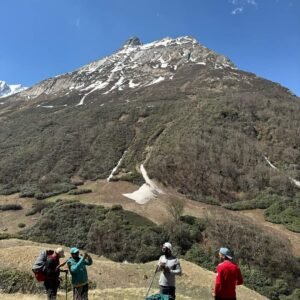
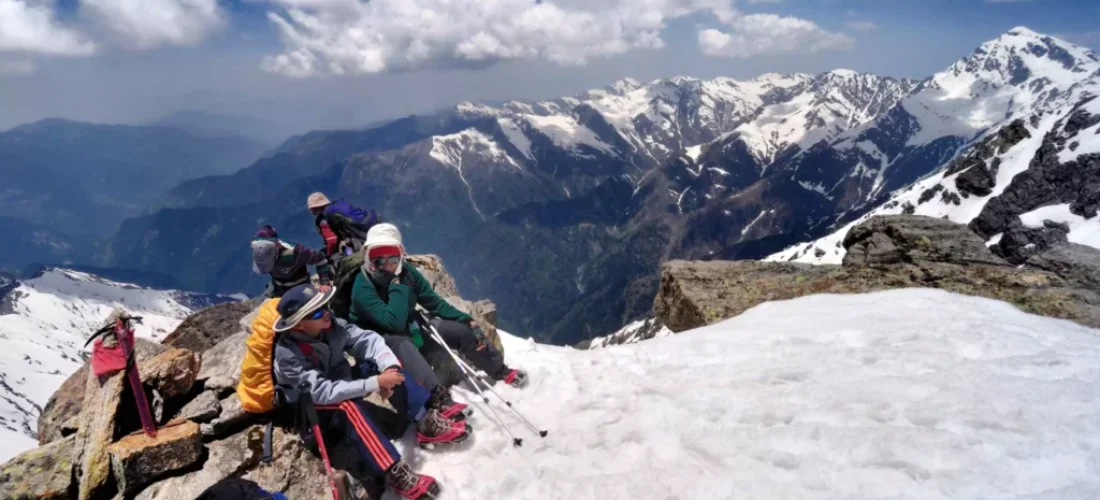
- The trail offers breathtaking views of prominent mountain peaks, including Bandarpoonch, Swargrohini Peak, and other Garhwal Himalayan peaks. Trekkers are rewarded with unobstructed panoramas of the snow-clad mountains, creating a feeling of being on top of the world.
Adventurous and Mystical Experience:
- Spanning over 8 days, the trek is a perfect blend of adventure and mysticism. Trekkers traverse through alpine meadows, dense forests, and challenging terrains, providing a diverse range of experiences.
Itinerary
Day 1: Dehradun to Sankri
Dehardun is the starting point for the Bali Pass trek. The trekkers must arrive before 6:30 a.m. for a breathtaking trip to Sankri, the basecamp. The scenic drive takes you along adventurous Himalayan paths, where you can enjoy an amazing long drive and stop for lunch in the centre. Sankri is a bustling village in Uttarakashi’s Govind Wildlife Sanctuary, located 220 kilometres from Dehradun. Arrive in the evening and check into a hotel that has been pre-booked. Now, in your spare time, go wandering in the enchanting village. Sankri market is a bustling but beautiful location with a few local-owned shops and a few restaurants. The connectivity in this area is weak, but there are intermittent BSNL and Vodafone signals. The beauty of nature and the setting sun, which makes the Himalayan peaks golden, is a sight to behold. After that, head to the hotel and spend the night there.
Day 2: Sankri to Seema/Osla (homestay/campsite)
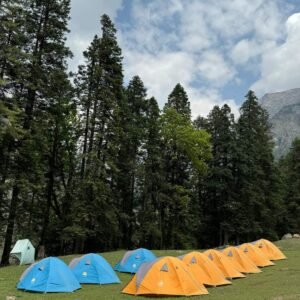
After breakfast, we will drive 16 kilometers from Sankri to Gangarh Village. From there, we embark on a 4-kilometer trek to Seema/Osla village, which should take about 3 to 4 hours. This trek immerses you in the Himalayan landscape, abundant with wild orchids. The journey begins in the valley along the true left of the Rupin River, with the path initially descending from Taluka village before climbing again. As we move forward, we traverse through dense forests of chestnut, walnut, willow, chinar, and various conifer trees, and pass by a few waterfalls. By late afternoon, we will arrive at Osla village, noted for its exquisite architecture, especially the Duryodhana temple, adorned with intricately carved peacocks. Along the way, you’ll also witness the charm of Taluka and Dhatmeer villages. Overnight accommodation will be in a homestay or campsite in Osla/Seema village.
Day 3: Seema/Osla to Devsu Thach
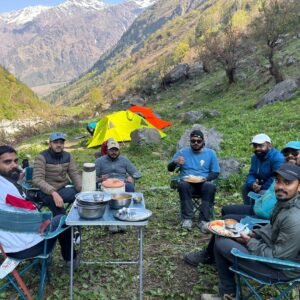
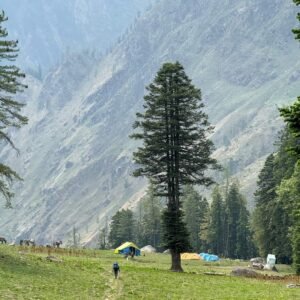
Start your day early and go on the track. After passing a bridge, look to your right for a wooden bridge across the Supin River. The trail is relatively flat and eventually ascends. After a half-hour walk, you’ll arrive at Seema, where you’ll find a set of Forest and GMVN guest houses as well as some Dhabas. After that, cross the Supin River via another bridge. Take the trail that leads down to the Ruinsara Gorge. Enjoy crossing a stream and passing through a landslide-prone field. There is an area with a collection of big boulders when you approach the Ruinsara park. The river is left below; climb up and take one more look at Osla village. Continue hiking for another half hour before you reach the Devsu Thach meadows, which are in full bloom. The path runs through meadows that are covered by forest. Devsu Thach is 2 kilometres deep, with “The Valley of Gods” and “Har Ki Dun Valley” clearly visible to the left. Hike all the way to the end of these meadows, pitch your tents there, and spend the night in peace.
Day 4: Devsu Thach to Ruinsara Tal/Lake
The trail then descends steeply to the Ruinsara River below. After 20 minutes of rapid descent, you can reach a wooden bridge that spans the Ruinsara River. Cross it and follow the road into the beautiful Ruinsara gorge. The trail now consists of a series of levelled and incremental ascents over pasturelands and boulders. Pass through some mountain twists and cautiously cross landslide-prone terrain ahead. It is possible that crossing it would be challenging before you meet a waterfall on the left side. From here, the trail descends before quickly ascending again; you are now in the meadows part, which is covered in scree and snow. Go on to a wide meadow, where you can enter Untigad campsite in 30 minutes. The path runs across the Ruinsara River, with Untigad terrain on the left side of a bridge. The path leads to Ruinsara Lake, passing through a birch forest and a boulder zone. After about 45 minutes, take a look at the glacial lake below. The Ruinsara Lake is surrounded by meadows, making it an excellent camping spot.
Day 5: Ruinsara Tal/Lake to Odari
Start the day early and continue on the trail; today’s trek is not easy and involves cautious crossing. It will include river crossings, rock jumping, and wandering over avalanche areas, all of which will be fun. On the road, the Swargarohini ranges can be seen, and the first snow patches can be seen on the meadows ahead. When you hit the snow line, the climb becomes steep and slick. Join a valley and climb up the first hill; behind you, a snow ridge with Odari ice fields can be seen. The shepherds use Odari, a rock cave, to remain dry throughout the monsoon season. Reach the ice area, which will serve as your campsite for the day and will provide you with spectacular views of magnificent Swargarohini and Bandarpoonch.
Day 6: Odari to Bali Col Camp
The journey from Odari to Bali Col Camp spans 5 kilometers, with the camp perched at an elevation of 15,100 feet. The trek commences southwest toward the base camp, navigating along a mountain ridge. As you progress from Odari, the trail’s difficulty intensifies, particularly near the Pass. Ensure you carry at least 2 liters of water, as there are no water sources en route to the next campsite.Given the high altitude of 15,100 feet at tonight’s campsite, it’s crucial to stay well-hydrated and active to minimize the risk of Acute Mountain Sickness (AMS). The ascent along the ridge is steep, with a 60-degree incline, presenting a challenging climb despite the short distance. Temperatures drop significantly at these heights, and acclimatization is essential, so adhere to your trek leader’s guidance. Aim to sleep early and rest thoroughly in preparation for the next day’s summit attempt.
Day 7: Bali col camp to Lower Dhamni via Bali Pass
Today, we reach the trek’s highest point at 16,200 ft, then descend to Lower Dhamni at 11,100 ft. This will be our longest and most challenging day, beginning early as we head southeast towards the Pass. The snow-covered trail requires using skills learned from your trek leader. It takes 2 to 3 hours from the base camp to the summit, where you can enjoy stunning 360-degree views of Himalayan peaks like Bandarpoonch, Swargrohini, and the Yamunotri Valley. The summit trail is narrow, accommodating only 20 to 30 people at a time. After soaking in the views, we descend to Lower Dhamni. This steep and technical descent requires caution, especially on paths filled with loose stones. Follow your trek leader closely on the narrow 6-inch-wide paths down to Upper Dhamni, where we’ll rest briefly.The trail from Upper to Lower Dhamni is unmarked and confusing, so stay close to your group. After navigating the zig-zag path, the trail flattens out, leading through a forest for about 2 km to the Lower Dhamni campsite. After this exhausting day, rest well in your tents.
Day 8: Lower Dhamni to Jaan ki Chatti and drive to Dehradun
Today marks the final day of your trek. The descent is relatively easy, primarily along a cement-paved trail with more downhill sections. It takes about 1 to 2 hours to reach the Yamunotri temple. After visiting the shrine, we will follow the regular pilgrim route to Janki Chatti, a 5 km trek. Transportation will be arranged from Janki Chatti to Dehradun. Departing early, you will head back home with beautiful memories from this incredible offbeat trek.
- Transportation (as per the itinerary):
- Transport from Srinagar to Aru & return : NON AC.
- Insurance (Mandatory).
- Food during the transit.
- Any kind of personal expenses.
- Mule or porter to carry personal luggage.
- Emergency evacuation, hospitalization charge or etc.
- Anything not specifically mentioned under the head Inclusion.
- Hotel stay in Srinagar.
How To Reach
By Air:
The nearest airport to the starting point of the Bali Pass trek is Jolly Grant Airport in Dehradun.
- From Major Cities: You can take a flight from Delhi, Mumbai, or other major cities to Dehradun.
- Airport to Dehradun City: The airport is about 25 km from Dehradun city center. You can take a taxi or a bus to reach the city.
2. By Train:
The nearest railway station is Dehradun Railway Station.
- From Major Cities: There are regular trains from cities like Delhi, Mumbai, Kolkata, and Varanasi to Dehradun.
- Station to City Center: The railway station is located in the city center, making it easy to find accommodation and further transport.
3. By Road:
Dehradun is well-connected by road to major cities in North India.
- From Delhi: The distance from Delhi to Dehradun is approximately 240 km. You can take a bus, taxi, or drive your own car. The journey takes about 6-7 hours.
- From Other Cities: Regular bus services (both private and state-run) are available from cities like Haridwar, Rishikesh, and Chandigarh to Dehradun.
4. Dehradun to Sankri:
The trek to Bali Pass typically starts from Sankri, a small village in Uttarkashi district.
- By Road (Dehradun to Sankri): Sankri is about 200 km from Dehradun and it takes around 8-10 hours to reach by road.
- Private Taxi: You can hire a private taxi from Dehradun to Sankri.
- Shared Taxi/Jeep: Shared taxis or jeeps are also available from Dehradun to Sankri, but they may take longer.
- Bus: There are limited bus services from Dehradun to Sankri. Buses may not run daily, so it’s advisable to check the schedule in advance.
5. Trek Itinerary:
The typical itinerary involves starting the trek from Sankri, passing through beautiful locations like Taluka, Seema, and Dev Thach, before reaching the Bali Pass.
Safety :
- It is essential that you arrive at the starting point of any hike or excursion in the best possible physical condition and readiness.
- The hike is not tough; in fact, if you can keep both your feet and your mind calm and strong during the journey, you will discover that the hike is rather simple.
- When you are out on a hike, bear in mind that you may not always be with your guide and that you may not always be on the correct trail.
- The majority of individuals glance both where they are going and where they are going while they are walking; this might produce twitching in your legs, which can make the whole journey difficult.
- It is imperative that you see your physician if you are experiencing any kind of health issue.
Fitness :
As you climb to higher altitudes, the air grows thinner and less oxygen is present. The amount of oxygen in our blood is equivalent to the proportion of haemoglobin that is saturated with oxygen. At altitudes above around 2,100 metres (7,000 feet), the amount of oxygen carried by our blood starts to decrease. At the same time, the human body possesses both immediate and long-term adaptations to altitude that help it somewhat compensate for the shortage of oxygen.
A Great First Trek for Anyone Who Wants to Get Into Hiking:
- The Kedarkantha Trip is a Moderate level trek in terms of fitness requirements. The track is well-marked and has only modest inclines and declines. Water fountains may be seen at various points throughout the path. However, it’s still best to be ready if you’re planning your first major Himalayan trekking adventure. Here is a plan for getting in shape for the trip.
- Our hikes are typically designed such that you cover around 9 kilometres in six hours, however this might vary somewhat depending on the terrain. It’s about the same as walking 6 kilometres an hour over the plains, therefore the speed is around 1.5 kilometres per hour.
- Following this plan, you may train yourself to run 3 kilometres in 30 minutes. Always begin your workout routine with some light stretching and warm-up moves.
- Follow this training schedule for trekking fitness required:
- Week 1: Walk for 10 minutes at a fast pace, jog for 10, and finish with a slow stroll for 10 minutes.
- Week 2: 15 minutes of jogging, followed by a 5-minute brisk walk. A leisurely stroll that takes no more than 5 minutes
- Week 3: Walk briskly for five minutes. Jogging for 15 minutes A brisk stroll that takes no more than 5 minutes
- Week 4: Do a brisk 5-minute walk, then a 25-minute jog, and finish with a 5-minute cool down.