Har Ki Dun
Description :

Altitude
12000 Ft.

Duration
7 Days

Trek Length
43km

Base Camp
Sankri

Trek Difficulty
Easy to Mod

Transportation
Included
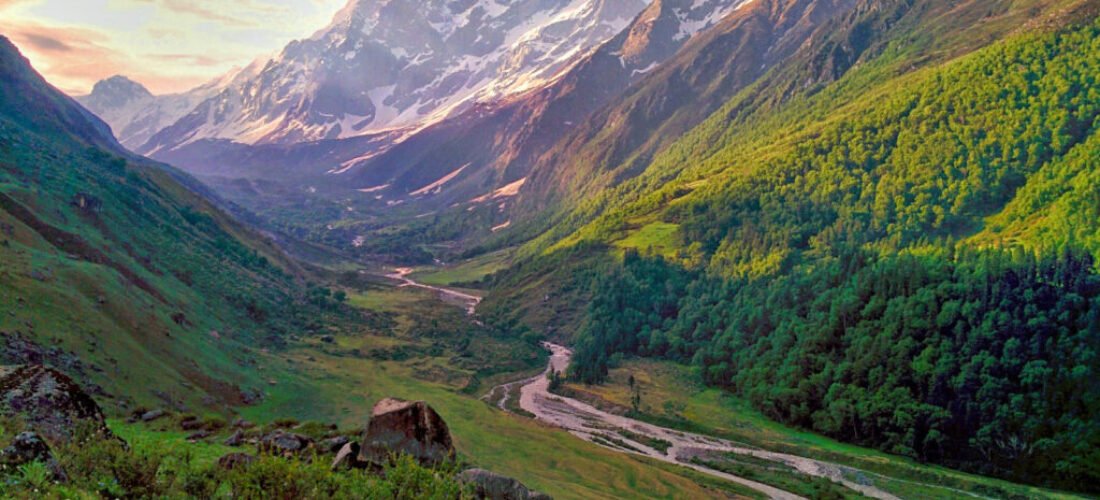
A trekker’s delight, the har ki dun trek is a stairway to heaven that will make you fall for its beauty. The thing that makes it an alluring trek is its accessibility both in summer as well as the winter season. Har Ki Dun Valley is situated at the western flank of Garhwal in the Uttarkashi district and is very popular with trekkers as well as climbers. It is a lovely walk to the Har Ki Dun valley with fascinating views of the Swargarohini group of peaks. Har Ki Dun catchment area is a major source of the Yamuna River System and the main source of the largest tributary of Yamuna.
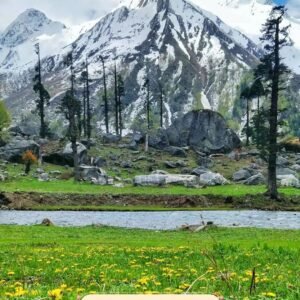
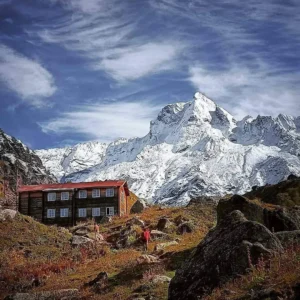
Har ki dun trek takes you through some of the most charismatic alpine meadows and pine forests which is a treat to the eyes. During winters the snow-covered trails of Har Ki Dun Trek looks mesmerizing as and when the sun tries to peep behind the clouds. One of the oldest Treks in the Himalayas, known as the Valley of Gods, some believe Har ki doon is the same route taken by the Pandavas in the Mahabharata on their ascent to heaven. Swargarohini—the snow peak, the vision of which dominates the Har Ki Doon Trek bears a legacy of the mythical stairway to heaven and this trek gives you a true experience of trekking in Uttarakhand the land of Gods.
Itinerary
Day 1: Drive from Dehradun To Sankri
At a central location in Dehradun, we gather with our other members, and then we go to a restaurant for an early lunch (expense is yours). After leaving Mussoorie, continue driving to Sankri by way of Kempty Fall, Yamuna Valley, Tons Valley, Nainbagh, Nowgaon, Purola, and Jarmola. We have made reservations at a hotel for the night.
Day2: From Sankri To Osla
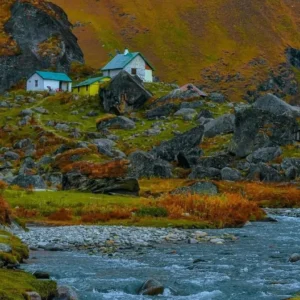
We check out of our room after breakfast and make our way to the very last town before reaching the main road. The Govind Wild Life Sanctuary is around 13 kilometres away from this picture-perfect town (Sankri is the place where the check post is located). Har-ki-dun is situated at an elevation of 3566 metres, while the Swargarohini Peak rises to a height of 6096 metres in the background. Sankri serves as the entrance to this area. Sankari to Taluka via jeep if road is passable. The beginning of our hike is in Taluka, and from there we make our way down the glacial Supin river for the first portion of the journey. Taluka is a tiny hamlet that is recognised for being snuggled in the lap of nature. It is also known for its exquisite “Pahari homes” that are fashioned out of a complex ensemble of wood, stone, and mud – a structure that should not be missed since it is resistant to earthquakes, has animal stalls on the bottom level, and uses the heat generated by the animals’ bodies to warm the living space on the floor immediately above! The residents of the community, who live at an elevation of 1900 metres, have access to everyday necessities via the village’s guesthouses and the handful of shack businesses that are situated there.
Day3: From Osla or Seema to Waterfall Campside
The path that leaves the settlement of Osla first heads downhill and then continues gently on the true left side of the valley that is next to the river Supin. After some time has passed, the path continues to wound uphill through an attractive forest that is full of chestnut, walnut, and willow trees on its way to the settlement. Osla hamlet may be seen out in the distance on the valley’s actual right. The journey to Seema will continue when one reaches this stage. The settlement of Osla may be seen in the distance from the camping area, which is situated across a rapid river. Overnight in tents. Meals: Breakfast, Lunch & Dinner.
Day4: From Waterfall to Har Ki Dun and Back
The route that begins at the Waterfall campside then continues on the true left site of the valley, travels through farmland, and then over a hanging bridge over the river Supin to arrive on the right side of the valley. The path now begins its ascent, passing through several farms and pastures that are dotted with houses. On the other side of the valley is some amazing coniferous vegetation that any photographer would be lucky to capture on film. The climb up to Har ki Dun is a gentle one, but it rewards visitors with breathtaking panoramas of snow-capped mountains and verdant, terraced alpine farms. The last challenging ascent of around 200 metres brings one to the renowned meadows of Har ki Dun, where one can see the west face of Swargrohini towering above the valley. A little creek runs through the area where the camp is set up, and the summits of Har Ki Dun and Swargarohini can be seen in the distance. On the Same Day, Descend to the Waterfall’s Basecamp.
Day5: From Waterfall to Osla Village or Seema
Even before arriving in Har Ki Dun, one may have a good look at the majesty of Swargarohini, as well as Kala Nag, Bandar Pouchch, and the Ruinsara Peaks. A genuinely paradisiacal and quiet location, ideal for people who wish to spend some time by themselves while feeling at one with the vastness of the landscape. Either turn to the right towards Swargarohini and the Jumnar glacier or turn to the left towards the Borasu pass (Taking one to Chitkul in Himachal). The bottom of the enormous and gorgeous valley is covered with soft grassy areas, and the valley is surrounded on three sides by large mountains. Overnight in tents. Meals: Breakfast, Lunch & Dinner
Day6: From Osla or Seema to Sankri
The journey back to Sankri Vai from Taluka of Sankri is an easy stroll that provides many opportunities to enjoy and photograph the natural beauty of the valley and the surrounding villages.
Day7: From Sankri To Dehradun
We start the day with a hearty breakfast and then go to Mori. If the weather cooperates, we are going to go white water rafting. After that, we get in our vehicle and travel from Mori to Dehradun so that we may take our train or aircraft. Breakfast and lunch will be provided.
- Accommodation (as per the itinerary):
- Guest house (Triple sharing).
- Camping (Twin sharing basis).
- Meals (Veg + Egg):
- Day 1 Dinner to Day 7 packed lunch as per the itinerary.
- Support:
- 1 Versatile base camp manager handles communication and deploys extra manpower in emergencies.
- 1 Mountaineering & First aid qualified professional trek Leader.
- 1 Experienced high altitude chef.
- Local experienced guides (Number of guides depending on the group size).
- Enough support staff.
- Trek equipment:
- Sleeping bag, Sleeping liners (if required), Mattress, Utensils.
- 3 men all season trekker tent (twin sharing), Kitchen & Dining tent, Toilet tent.
- Camping stool, Walkie talkie.
- Ropes, Helmet, Ice axe, Harness, Gaiters & Crampon (if required).
- First aid:
- Medical kit, Stretcher, Oxygen cylinder, Blood pressure monitor, Oximeter, Stethoscope.
- Mules/porters to carry the central luggage.
- Clock room facility available at the base camp for additional luggage.
- All necessary permits and entry fees, Upto the amount charged for Indian.
- Services from Aru to Aru.
- Transportation (as per the itinerary):
- Transport from Srinagar to Aru & return : NON AC.
- Insurance (Mandatory).
- Food during the transit.
- Any kind of personal expenses.
- Mule or porter to carry personal luggage.
- Emergency evacuation, hospitalization charge or etc.
- Anything not specifically mentioned under the head Inclusion.
- Hotel stay in Srinagar.
Srinagar Accommodation: The stay at Srinagar on the last day is not included in the trek fee. However we can assist you in booking a hotel or a houseboat for the same, please let us know at least 15 days in advance to the start of the trek. The intimation is by email only at info@trekgoindia.com
Things can be provided on demand and availability (participant has to pay extra for these things).
1- Satellite phone/set phone – a type of mobile phone that connects via radio links via satellites orbiting the Earth instead of terrestrial cell sites like cellphones. Therefore, they can operate in most geographic locations on the Earth’s surface.
2- Gamow/PAC HAPO Bag (Portable Hyperbaric Bag) – is a unique, portable hyperbaric chamber for the treatment of acute mountain sickness (AMS), also known as altitude sickness.
3- AEDs (Automated External Defibrillators) – are portable life-saving devices designed to treat people experiencing sudden cardiac arrest, a medical condition in which the heart stops beating suddenly and unexpectedly.
How To Reach
Directions to go to Dehradun:
- By Air: Take flight to Dehradun airport (Jolly Grant Airport) (25 km, 50 min), if coming by flight then come one day early.
- Traveling by Train: Take an overnight train to dehradun.
- By Road:Take a bus to Dehradun, and then take a cab to the pickup point (Railway station).
Delhi to Dehradun – 250km | 6hr.
Chandigarh to Dehradun – 220km | 5hr
Safety :
Points to remember for safety in the trek:
- It is essential that you arrive at the starting point of any hike or excursion in the best possible physical condition and readiness.
- The hike is not tough; in fact, if you can keep both your feet and your mind calm and strong during the journey, you will discover that the hike is rather simple.
- When you are out on a hike, bear in mind that you may not always be with your guide and that you may not always be on the correct trail.
- The majority of individuals glance both where they are going and where they are going while they are walking; this might produce twitching in your legs, which can make the whole journey difficult.
- It is imperative that you see your physician if you are experiencing any kind of health issue.
Fitness :
As you climb to higher altitudes, the air grows thinner and less oxygen is present. The amount of oxygen in our blood is equivalent to the proportion of haemoglobin that is saturated with oxygen. At altitudes above around 2,100 metres (7,000 feet), the amount of oxygen carried by our blood starts to decrease. At the same time, the human body possesses both immediate and long-term adaptations to altitude that help it somewhat compensate for the shortage of oxygen.
A Great First Trek for Anyone Who Wants to Get Into Hiking:
- The Kedarkantha Trip is a Moderate level trek in terms of fitness requirements. The track is well-marked and has only modest inclines and declines. Water fountains may be seen at various points throughout the path. However, it’s still best to be ready if you’re planning your first major Himalayan trekking adventure. Here is a plan for getting in shape for the trip.
- Our hikes are typically designed such that you cover around 9 kilometres in six hours, however this might vary somewhat depending on the terrain. It’s about the same as walking 6 kilometres an hour over the plains, therefore the speed is around 1.5 kilometres per hour.
- Following this plan, you may train yourself to run 3 kilometres in 30 minutes. Always begin your workout routine with some light stretching and warm-up moves.
- Follow this training schedule for trekking fitness required:
- Week 1: Walk for 10 minutes at a fast pace, jog for 10, and finish with a slow stroll for 10 minutes.
- Week 2: 15 minutes of jogging, followed by a 5-minute brisk walk. A leisurely stroll that takes no more than 5 minutes
- Week 3: Walk briskly for five minutes. Jogging for 15 minutes A brisk stroll that takes no more than 5 minutes
- Week 4: Do a brisk 5-minute walk, then a 25-minute jog, and finish with a 5-minute cool down.