
Kuari Pass
Description :

Altitude

Duration

Trek Length

Base Camp

Trek Difficulty

Transportation
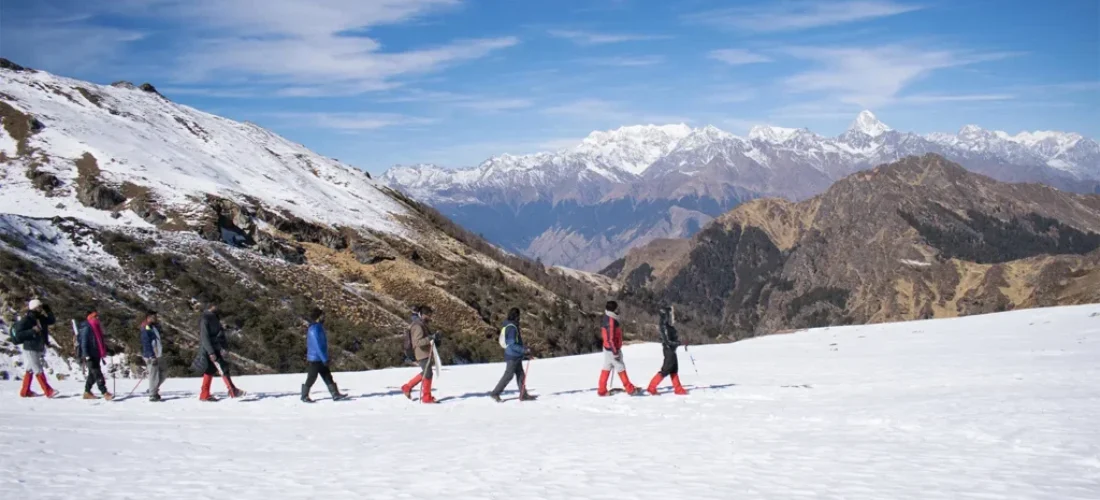
Nestled deep in the Garhwal Himalayas of Uttarakhand, the Kuari Pass Trek is one of India’s most scenic and rewarding trekking experiences. Popularly known as the Curzon Trail, this trek offers a perfect blend of adventure, natural beauty, and cultural richness.
Standing at an altitude of 12,516 ft (3,815 meters), Kuari Pass provides breathtaking panoramic views of iconic Himalayan peaks like Nanda Devi, Kamet, Chaukhamba, Trishul, and Dronagiri. …
Itinerary
Day 1: Haridwar/Rishikesh → Joshimath :
Route: Haridwar – Rishikesh – Devprayag – Rudraprayag – Karnaprayag – Joshimath
Drive: ~250 km / 9–10 hrs
Altitude: 6,150 ft
Highlights:
● River confluences (Alaknanda, Bhagirathi, Mandakini, Pindar)
● Scenic Himalayan drive.
Day 2: Joshimath → Dhak → Guling Campsite :
Drive: 12 km / 45 mins
Trek: 6 km / 4–5 hrs (6,700 ft → 9,600 ft)
Highlights:
● Views of Dronagiri Peak
● Himalayan villages & oak forests
Day 3: Guling → Khullara :
Trek: 6 km / 4–5 hrs
Altitude: 11,150 ft
Highlights:
● Dense oak & rhododendron forests
● First views of Hathi-Ghoda peaks
Day 4: Khullara → Kuari Pass → Khullara :
Trek: 11–12 km / 7–8 hrs (round trip)
Altitude: 12,516 ft
Highlights:
● Nanda Devi, Kamet, Chaukhamba, Trishul views
● Snow-covered bugyals
● Stunning ridge walk
Day 5: Khullara → Dhak → Joshimath :
Trek: 12 km / 6–7 hrs
Drive: 12 km / 45 mins
Highlights:
● Forest descent via Guling
● Return to Joshimath
Day 6: Joshimath → Rishikesh/Haridwar :
Drive: 250 km / 9–10 hrs
Highlights:
● Scenic Alaknanda river drive
● Trip concludes
Trek Cost Inclusion :
- Transport Rishikesh ↔ Joshimath ↔ Trek Base (shared vehicle).
- Meals (Breakfast, Lunch, Dinner, Tea/Coffee during trek).
- Accommodation (Guesthouse in Joshimath & tents during trek).
- Trekking permits & forest entry fees.
- Trek leader, guide & support staff.
- Sleeping bags, mats & camping equipment.
Trek Cost Exclusion :
- Meals during transit (Day 1 & Day 6 on road)
- Personal porter/mule for backpack (Mule/porter charges for personal luggage.)
- Personal expenses (snacks, mineral water, etc.).
- Any king of Insurance
- Any emergency evacuation/rescue cost
- Anything not mentioned in inclusions
How To Reach
By Air
Jolly Grant Airport, a mere 25km away from the city, is the closest airport to Rishikesh. With regular flights from Delhi to Rishikesh, this option offers a comfortable and time-saving travel experience. We suggest planning your trip in advance and arriving one day early to fully immerse yourself in the Rishikesh experience.
Safety :
Trekking Safety Guidelines:
Following safety rules is critical in Himalayan terrains:
Stay with the group: Do not wander off alone. Kuari Pass trails can be confusing, and weather can change rapidly.
Follow the guide: Trek Soul provides experienced guides familiar with local routes, weather conditions, and emergency protocols.
Weather awareness: Always check forecasts. Avoid trekking during heavy rain or snow.
Pace yourself: Avoid rushing, especially on steep ascents and descents. Fatigue increases the risk of slips and falls.
Communication: Carry a fully charged phone and a power bank. Guides are equipped with walkie-talkies for areas with poor network coverage.
Emergency Preparedness:
Preparedness for unforeseen situations is crucial:
Rescue protocols: Trek Soul ensures trekkers are aware of evacuation plans and nearest medical facilities.
Buddy system: Always trek in pairs or small groups to ensure mutual assistance.
Local knowledge: Guides carry information about local terrain hazards, river crossings, and wildlife precautions.
Mental Readiness:
Trekking is as much a mental challenge as a physical one. Patience, positivity, and adaptability to changing conditions enhance safety and enjoyment. Trek Soul conducts pre-trek briefings to prepare trekkers mentally for high-altitude trekking.
Fitness :
Physical Preparation:
Before embarking on the Kuari Pass Trek, physical fitness is crucial. Even though the trek is suitable for beginners, trekkers must prepare their bodies to handle long walking hours, steep inclines, and uneven terrain.
Cardiovascular training:
Activities like running, cycling, or swimming improve lung capacity and endurance. Aim for at least 30–45 minutes of cardio, 4–5 days a week.
Strength training: Focus on leg muscles (quadriceps, calves, and hamstrings) through squats, lunges, and step-ups. Core exercises such as planks and sit-ups help maintain balance during uphill and downhill sections.
Trekking practice:
Shorter hikes with a backpack help your body adapt to carrying weight over uneven terrain. Practice on trails with varying elevations to mimic trekking conditions.
Trek Soul recommends starting fitness routines at least 4–6 weeks before the trek.
